
León, Gto., September 22, 2016. With the purpose to contribute the search of solutions to diminish the high prevalence of diabetes, cardiovascular and neurodegenerative diseases, among other chronic diseases, from September 26 to 28 there will be the 2nd Ibero-American Symposium of AGEs and Health, that will have an important participation of researchers from the Department of Medical Sciences of the University of Guanajuato.
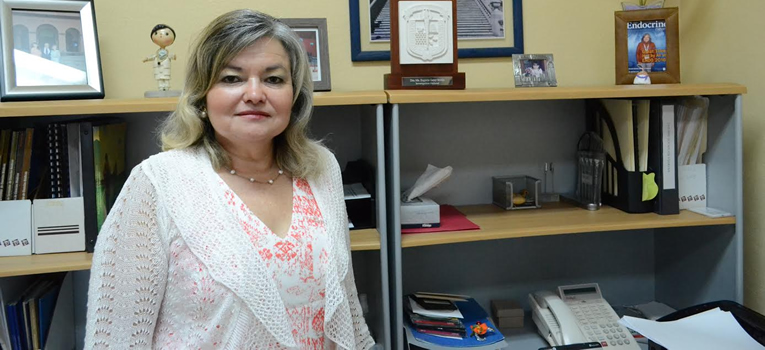
The President of the Ibero-American Society AGEs and Health, Dr. Maria Eugenia Garay Sevilla, academic ascribed to the Department of Medical Sciences at UG, referred that the objective of the event is to reveal in the scientific community the latest progress in the study of Advanced Glycation End products (AGEs), and divulge among the population the alternatives to diminish the consumption of these compounds, which are highly harmful for health.
AGEs generate in the organism as part of the normal aging process, but increases when diseases such as diabetes, Alzheimer, resistance to insulin, arthritis and neurodegenerative illnesses, explained Dr. Garay.
However, there are exogenous sources of AGEs: smoking and above all, diet, especially when there is a high consumption of animal origin products, specifically dried red meats and cooked in high temperatures, added the ascribed researcher to the Department of Medical Sciences of Campus Leon.
Concerned for the result of the research which has a strong relation to the blood levels in the AGEs and these diseases, especially in Ibero-American countries; a group of researchers decided to organize this symposium, that in its first edition –in 2014—had the University of Guanajuato as the venue.
The international encounter which will be held in Santiago de Chile, will have the participation of 18 conferences from countries such as Spain, Uruguay, Chile, United States and Mexico.
From UG, will attend Dr. Garay Sevilla, who will give the conference "interventions to reduce the consumption of AGEs, results from clinical studies," focused on reveling how to diminish the consumption of AGEs in the diet and "AGEs and physical activity." The latter –cleared the researcher—is a joint project with Dr. Maciste Habacuc Macías Cervantes, who won't be able to attend the symposium, but given the importance of the subject, they opted for Dr. Eugenia to expose it, "because in the world level there is not much to talk about and it is important to do so," he sustained.
Dr. Claudia Luévano Contrera will also participate, who besided talking about "Metabolism, absorption and excretion of AGEs," will give the workshop for nutritionists "Quantification of AGEs consumption," while Dr. Armando Gómez Ojeda will speak about the Analysis of AGEs in foods (ELISA versus chromatographic methods) and will be responsible for the workshop "Appropriate techniques for the determination of AGEs in food and samples of human beings."
Among the activities of the Intl. Symposium stands out a round table with the topic "Why not consider AGEs in the guides of diabetes handling, renal insufficiency and prevention of chronic diseases?", where Dr. Félix Escaño Polanco, President of the Latin American Association of Diabetes, Dr. Nestor Soto, Representative of the Chilean Society of Endocrinology and Diabetes; Dr. Claudio Mizon, Representative of the Center of German Clinical Diabetes of Santiago; Dr. Eduardo Lorca, President of the Chilean Society of Nephrology and Dr. Fernando Carrasco – President of the Chilean Association of Clinical Nutrition, Obesity and Metabolism, will intervene.
In such table, it will be planted the importance of taking measures to diminish the consumption of AGEs, and that the changes in diets will be included in the guides that divulge these Latin American societies, to achieve a social impact of the academic work, finalized Dr. Garay Sevilla.