 Salvatierra, Gto. October 29, 2016.- The University of Guanajuato (UG) and the Technical Council of Water (COTAS) Salvatierra – La Cuevita, have been for working for a year, in a comprehensive program with farmers in the region with the purpose to prove the benefits of working with natural fertilizers, the easiness of seeding cabbages, fruit, cereals and seeds with the drip irrigation system and follow up the seeding, harvest, transformation and commercialization.
Dr. Antonio Pérez Nieto, Dr. Lorena Vargas and Dr. Gabriela Arroyo from the Department of Agroindustrial Engineering of the Division of Health Sciences and Engineering from the University of Guanajuato approached COTAS about a year ago, which have the objective to be the promoter social instrument of the water negotiations concerning actions between the users to seek the efficient use of the resource and preservation in quantity and quality.
Background
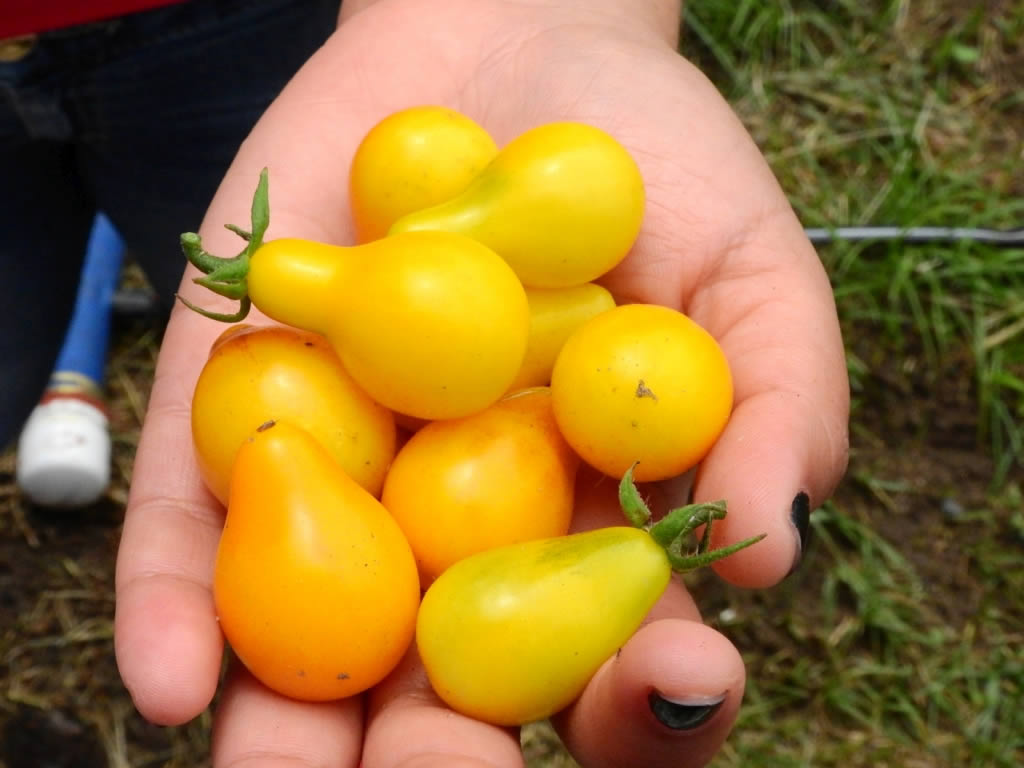
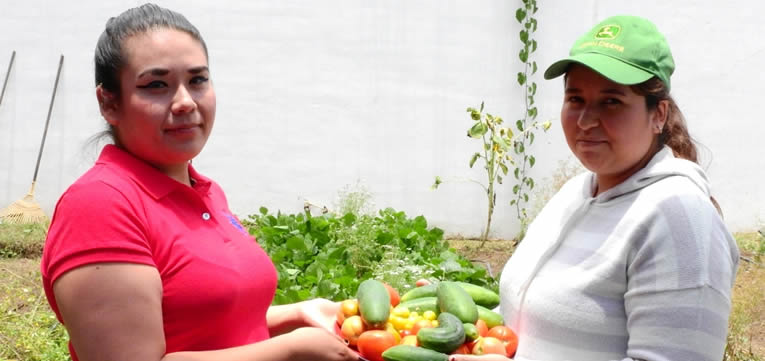
At first, the involved students from Campus Celaya-Salvatierra made a diagnosis with the farmers on the zone where they were interested in knowing the benefits of being part of the complete cycle of the product, meaning the seeding, harvest, transformation and commercialization, hence, in COTAS' offices were installed a backyard patch as a "model" with different vegetables and the use of sectioned drip irrigation system.
Francisco Martínez, technical engineer of COTAS explains, "we noticed that the zone has very little technology, since most of them use gravity irrigation; a traditional method to water their cultures "practically flooding the surface". However, the efficiency is 40%, the aquifer has a large shortage and if they continue using this kind of systems we won't be able to rescue them."
The alternative
Drip irrigation is a system that works with a 90% efficiency, it means, all the water is being used by the culture. It works with a pair of water tanks that supply the system with water, a small tank with a biofertilizer mix and filter system that avoids obstructions; the intention of these systems to save water and work uniformly and no loss of water pressure nor water, for that it is necessary a pump that provides pressure and it can be sued in cultures of 1 up to 3 hectares sectioning as needed.
Dr. Pérez Nieto adds, from this collaborative work, different research products have come out, such as research summers, social service projects, theses, national conferences, "but the best of all is that have acquired the trust if the producers and now we give workshops in their communities."
The involved
For Elizabeth Granados, now a graduate from the agroindustrial engineering, explains: "I joined the project since the beginning, we started working with a shovel and a pick; throughout that time, we have harvested radish, onion, coriander and cantaloupes, the farmers are fascinated and very interested for the worm-compost, so it is a great satisfaction to be able to share my knowledge with them. One the greatest challenges is that water be more sustainable, since the hydric use is sufficient and we are responsible to help to optimize its use."
For the people at COTAS, Lic. Julieta Díaz, the work that has been developed with the University benefits all who is involved since the students use their knowledge and that direct contact with the farmer, the Council maintains the balance of the aquifers and the producers have better tools and systems that can implement in their patches.
Engineer Martinez adds "as for the farmers know the alternatives, they are encouraged to change the system and we support them for the generation of the project before different instances so they can lower the resource and support them in technifying their patches."
The project will continue, from both institutions, in a future they plan to involve students from Regional Development, in the meantime, they'll continue with talks, training and convincing more producers to technify their cultures.
Photo Gallery