
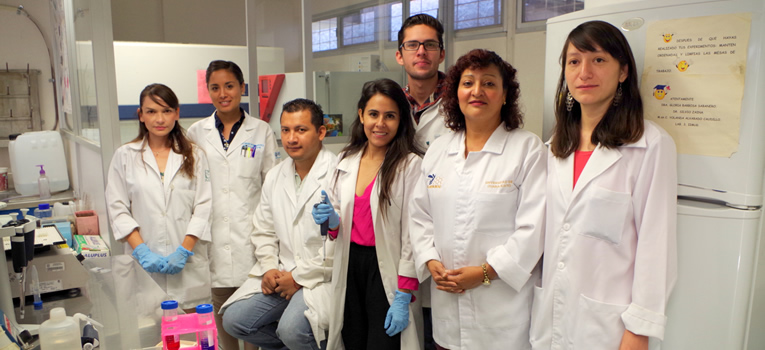
Guanajuato, Gto., July 22, 2017.- The fetal origin of the human diseases is part of the research done in the academic body "Metabolism and reproduction". Dr. Gloria Barbosa Sabanero, professor and researcher at the Department of Medical Science of the University of Guanajuato (UG) is one of the scholars who lead this transcendent project.
In this scientific initiative, the researchers involved have worked for years searching indicators of the relation between an adverse fetal environment, and the emergence of a diseases in adult life. Dr. Barbosa explained that the study of the placenta is important since it is the interface between the mother and the fetus, since it satisfies the basic needs of the embryo such as breathing and feeding.
The researcher commented: "we focus in the specific study of the placenta to make evident markers and signals that determine the risk of the babies to possess any disease when they become adults. We're interested in studying the placenta, how are the transport mechanisms for nutrients that determine the infants to born with a low or high weight, which confers a greater risk to have a disease."
The scholar of the University of Guanajuato mentioned that, it is known that a different weight than normal in newborns, is related in the adult life with diseases such as diabetes, obesity, high blood pressure, cardiovascular diseases, just to mention some. The research is based on evaluating the energetic sensors, hormonal signals and recently focus on studying the nutrient carriers, which is important because when there's less or more nutrients, the fetus will too much or less respectively and those factors can affect the health of the adult.
"Perhaps a mother who is well fed, is a healthy mother, but certain micronutrients she lacked during pregnancy may dictate the weight of the baby, so it may have greater risk of a disease", mentioned Dr. Barbosa, and that is the reason why they also focus on the evaluation and analysis of the micro and macro nutrients granted to the fetus through the placenta.
It is worthy to mention that this research on the fetal origins of the human diseases is made not only by academics of the Department of Medical Sciences, but also by other members of the university community: of the Department of Biology, the Department of Chemistry and "Centro Médico Siglo XXI".
To finalize, Dr. Gloria Barbosa Sabanero, highlighted that all the projects developed towards the area of fetal diseases wouldn't be possible without the collaboration of the health sector, "we have the support and approval of León's Regional General Hospital, of Materno Infantil León, as well as from the "Instituto Mexicano del Seguro Social (IMSS), that allows us to work through policies of the bioethics committee and the approval, in this case, of the participants. In the hospitals, we have the patients and the collaboration of specialist doctors, and we have the infrastructure to develop new projects."
Likewise, the professor mentioned that continually, they attend to forums where they link with medics, endocrinologists, gynecologists, neonatologists, among other specialists to seek the best ways to apply the acquired knowledge and so, have a direct impact in society.
It is precise to mention that Dr. Gloria Barbosa studies the degree in Chemist Pharmacist Biologist at the University of Guanajuato, in the same institution, she took the masters and Ph.D. focusing her research in Experimental Biology. Since 2001, she is part of the faculty staff of the University of Guanajuato, place where she develops research on diabetic nephropathy, working in an in vitro model and currently creating the research group "fetal origin of the diseases".
The researcher mentioned that the laboratories and the research lines are open for the student community who would like to involve in such topics, may that be for making their professional social service or collaborating in the diverse studies carried out by the academic body "Metabolism and reproduction".