
Celaya, Gto., September 25, 2017.- The Chichimeca Jonaz used the word "úza" which means "Indio", and its plural "ézar" means "indios", to refer themselves and any indigenous person. Only when they speak Spanish, to name themselves, they use the word "chichimeca".
This group is in a "slow extinction", formed by only ten thousand Chichimeca indigenous, reason why Dr. Luis Enrique Ferro Vidal wrote "Simbiosis Guadalupana. Historia e Imagen Sagrada en el Mundo Ézar".
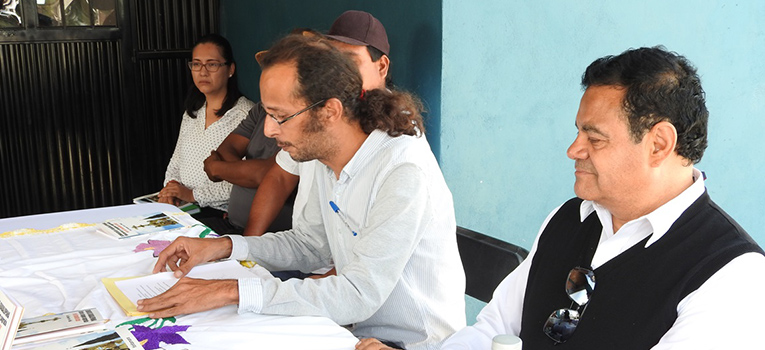
Dr. Ferro arrived with his family and authorities from the University of Guanajuato (UG) to the community known as "Rancho Uza" (indigenous ranch) or Chichimeca Mission, settled in the city of San Luis de la Paz, Gto., to present the book that rescues the customs and tradition of this ethnic group.
They were accompanied by the delegate of the community, Javier Hugo García Morales who thanked the creation of the book and Aurelio Quevedo Torres, member of the ethnic group, who recognized that this is the last group left from the Chichimeca Jonaz, "we are few, but we are still here; thanks for considering us and look towards this community," he said.
Dr. Miriam Reyes Tovar, Coordinator of the Master degree in Social and Cultural Studies at Campus Celaya-Salvatierra, expressed that more than an academic work, the book represents a form to last beyond time and join the past and the present and the community with the university.
In the book, she said, "we gather the anthropological effort to approach and meet the cultural expressions of a group, and validate their forms of life and traditions."
When Dr. Luis Enrique Ferro, full-time professors at Campus Celaya-Salvatierra, presented the book, he recognized that "we must learn many things from this group and acknowledge some others, because it was always identified for being fierce and committed when they defended their territory and their nation, good with the bow and an eagle eye, that made the Spanish conquerors and other indigenous groups who couldn't conquer them, tremble in fear.
He added: "that is the ézar essence, resist and continue resisting to live in a world that denies us and denies them the opportunity to be like any of us."
"Probably there are still ethnic vestiges in other points of the country, but the group known as the last of the Chichimeca, live here, in the ancient valley of Juagué-nandé, today, city of San Luis de la Paz, Guanajuato", said Ricardo Lira Montalvo, Director in the State of Guanajuato of the National Commission for the Development of Indigenous People, who was present in the book presentation.
Dr. Mario Jesús Aguilar Camacho, Director of the Department of Social, Cultural, Demographic and Political Studies of the Campus, made a portrait of the work's content; he spoke about the noble Chichimeca force, their feasts and political & family organization, of their rituals and religion towards the image of the Virgin of Guadalupe, to whom they celebrate on December 11.
The community's parson, the community's professor José Jesús Ramírez Torres, and members of the Ezar community, attended the book's presentation and received 150 books from the author.
While the books were delivered to the members of the Chichimeca community, Dr. Ferro expressed his recognition and admiration to the Ezar group for their "noble force that teaches to never be conquered."
Dr. Ferro's work, was dictated and decreed by the jury of the National Award for Research in Regional Culture 2008 "Wigberto Jiménez Moreno" and obtained the second honorific mention.