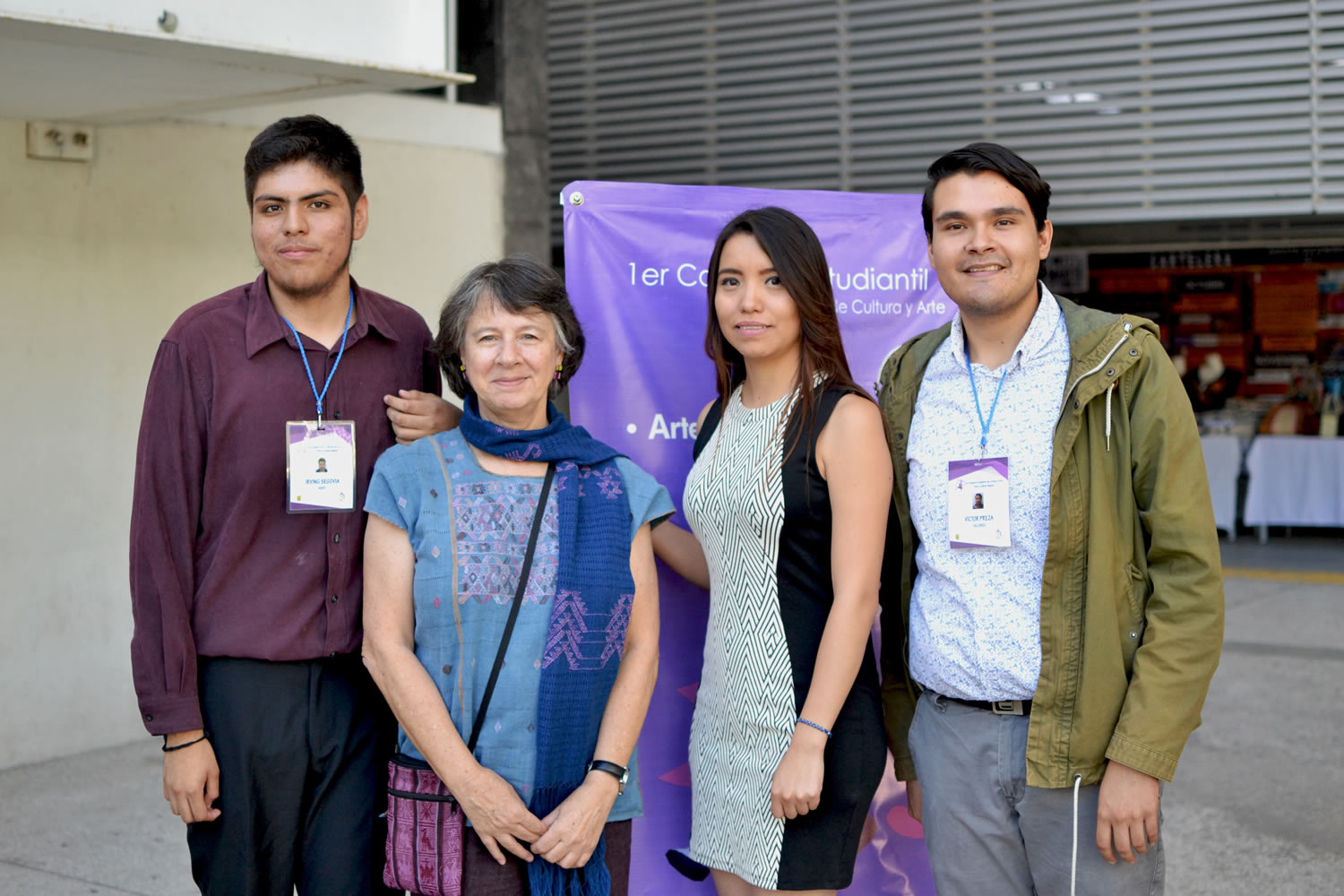
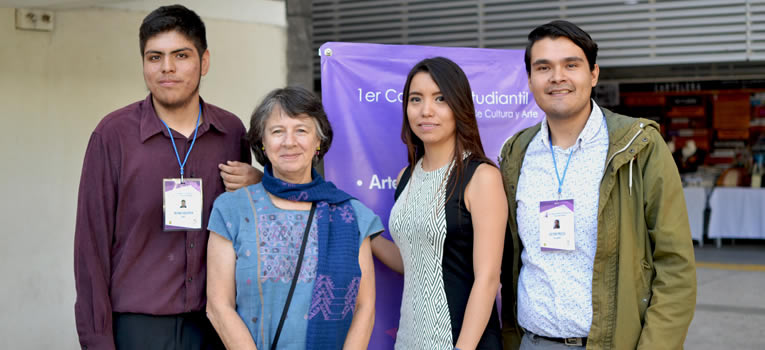
 León, Gto., November 6, 2017.- With the participation of Dr. Marta Turok Wallace, Coordinator of the "Ruth D. Lechuga" Center of Studies of Popular Art of the Franz Mayer Museum, began the first student colloquium of culture and art held in the venue Forum of Campus León of the University of Guanajuato (UG).
Dr. Turok gave the conference "Change and continuity in popular art. Cultural rights and appropriation." In it, she showed the transformation processes that manifest in popular art and culture, as well as the current challenges the artisans have in creating, exhibiting and acknowledgement of their work.
She analyzed the origin and the context of the Mexican popular art in which she mentioned natural resources, tools and techniques used by the artisans to create their work, the evolution of the technique and the generation of elements with a high content of design and innovation, plus the idea to reduce costs.
She highlighted that 80% of the traditional artisans in Mexico in the XXI century, are 38 years old and only a 20% are in the range of 5 to 29 years old. This creates a gap that causes a loss of knowledge and difficulty to transmit the know-how. She thinks it is important to research and have a series of strategies and actions with the purpose to recover the sense of things, as well as adapt to changes and transformations.
Likewise, she explained the causes that cause an abandonment of the ethnical identity and traditional artisan production such as: the devaluation of the created work, discrimination, racism, the globalization of the markets and the tendency to consume items of known brands and even plagiarism and hybrids of traditional iconography.
In an interview, she commented that it is important to support popular handcrafts and know the change and transformation factors, to know what are we losing. She mentioned that the role of the researchers and cultural managers must focus in making "a good diagnosis and a series of strategies, a plan of action and try to influence in the public policies, understand the value of a handcraft, as long as we achieve that, then we will have consumers who are aware and functionaries with more knowledge for a better decision making."
Lastly, she mentioned that the contribution from Guanajuato's state government for popular art is present in the toy, the cardboard craft and volcanic stone craft; she says it is important to support the art and the efforts of the artisans, since they have an impact in the economy of the families and in building the identity.
The student colloquium will continue through November 7-8 this year, with talks about handcrafts and popular art, also, an exhibit of arts and jobs, as well as the presentation of cultural projects. For more information, please visit: www.ugto.mx/campusleon
Photo gallery