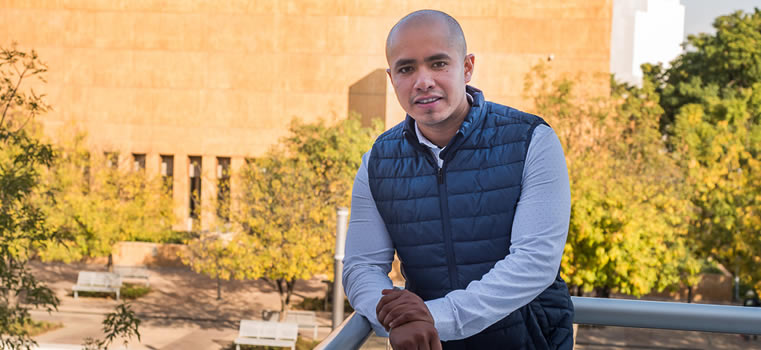
 León, Gto., December 8, 2017.- With the objective to evaluate the life style of patients with diabetes mellitus type 2, who receive attention from health professionals with a therapeutic education in diabetes; to know the impact it has in the patient's quality of life and their selfcare; and evaluate the lifestyle of patients who are being treated by personnel in the health area that don't have that education, José Gerardo Castro Rosales, a graduate of the degree in Sciences of Physical Activities and Health made this research project in collaboration with Campus León.
With the work titled: "Estilo de vida de personas con diabetes atendidas por profesionales de la salud con formación en educación terapéutica"; 160 patients from four Centers of Integral Attention of Essential Health Services (CAISES); three of them in the city of León and one more in the city of San Francisco del Rincón, plus a health unit of the Institute of Security and Social Services for the State Workers (ISSSTE) in León.
This research began in February 2016 as part of the professional social service activities made by José Castro and which he continued as a thesis project to obtain the degree with the support from the researchers at Campus León: Dr. Sergio Márquez Gamiño, Dr. Karla Susana Vera Delgado, M. Cipriana Caudillo Cisneros & Dr. Monserrat Vera Delgado
"We observed that being attended by a health professional formed with therapeutic education in diabetes, has a positive impact in the lifestyle of people who have diabetes" mentioned José Castro, who added that there are also benefits in the family nucleus of the patient, since they generate support networks with information that allows to make the right decisions to create joint strategies and adopt these healthy lifestyles such as a balanced diet, make physical activity, ease the monitoring of the sugar, use the adequate medicine, etcetera, which results in a better quality of life.
Another aspect that José Castro highlighted was, the labor that must be done by the health professionals to provide a whole attention in which they contribute with medical, nutritional, therapeutic knowledges among others that "empower the patient with information about diabetes, how to treat it, how to prevent complications and have a better control."
Likewise, he mentioned that the research can be followed up and add points to the measurement instrument to enquiry other aspects such as: the sleep quality, the reduction of the treatment cost, just to mention some. At the end, he emphasized on the importance of the formation the health professionals receive who are taking the course Diploma in Therapeutic Education in Diabetes and the answer they give to the population to prevent the illness and take care of it.