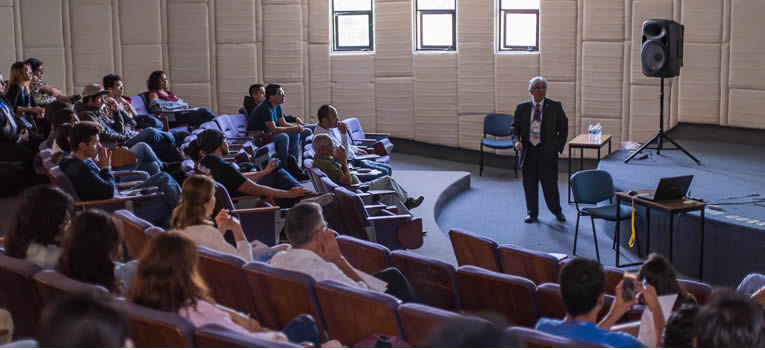
 León, Guanajuato. May 10, 2018.- With the participation of undergraduate students, postgraduate students and researchers and scholars, the second meeting about Applications of Physical Engineering in Biomedicine was held at the Division of Sciences and Engineering of Campus León of the University of Guanajuato (UG).
For days of activities, experts presented their results from their research in a poster and a talk, topics that link medicine with physics and the contributions to biomedical research.
Besides contributing to the generation of knowledge and strengthening the collaboration networks, they shared methodologies, applications and technological innovations that contribute to the health sector to ease the work of the professionals in the prevention, detection and treatment of illnesses such as cancer, hypertension, gastrointestinal illnesses, among others.
Seventy works were presented by specialists from the Centro de Investigaciones en Óptica (CIO), Universidad Autónoma de Zacatecas, Unidad Profesional Interdisciplinaria de Ingeniería Campus Guanajuato del Instituto Politécnico Nacional (UPIIG- IPN), Unidad Médica de Alta Especialidad No.1 del Instituto Mexicano del Seguro Social (IMSS), Centro de Investigaciones en Matemáticas, Instituto Tecnológico de León, Colegio Militarizado Madrid Bachillerato y también del Campus León & Celaya-Salvatierra of the University of Guanajuato.
A vast variety of topics delved on therapeutic applications of physics. In cancer treatment, radiotherapy has had a greater impact and progress in determining the effect the ionizing radiations have on fast growth cells with which they can improve the prognosis and the quality of life of the patients with certain cancerous tumors.
Dr. Francisco Miguel Vargas Luna, a scholar at the Department of Physics Engineering of the Division of Sciences and Engineering mentioned in an interview the importance the work of the scientific community has with the collaboration of health professionals since it "achieves a benefit for the patients" and progress in methodologies such as electronic microscopy, x-ray diffraction, spectroscopic techniques that let us know the tridimensional molecular structure of medicine, vaccines and biologically active molecules in way that it generates an impact in different sectors.
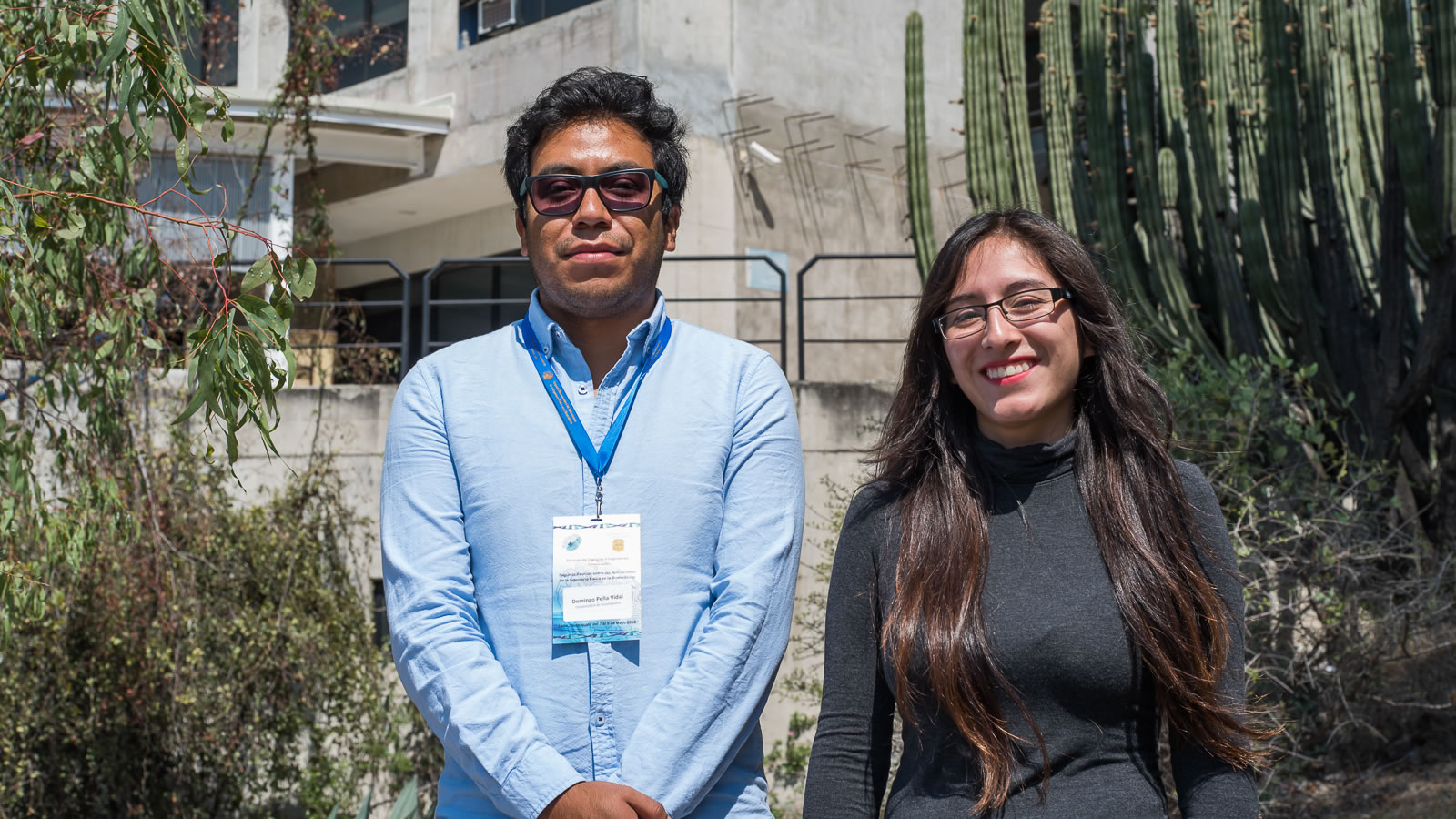
José Domingo Peña Vidal, a student of the master's in applied sciences mentioned that the work presented the obtention of data from x-ray spectrum to simulate a tomograph and know the correct dose the patients must receive to prevent damage to the crystalline and the loss of vision or create cataracts, also, make prevention protocols both for the sick and the personnel in charge of handling the tomograph.
Laura Madrid Molina, a student of the UPIIG-IPN, collaborates in research projects with Campus León, mentioned that in her protocol there was a qualitative analysis with the purpose to generate a technique that reduces the costs and process time of medicine.
Photo gallery