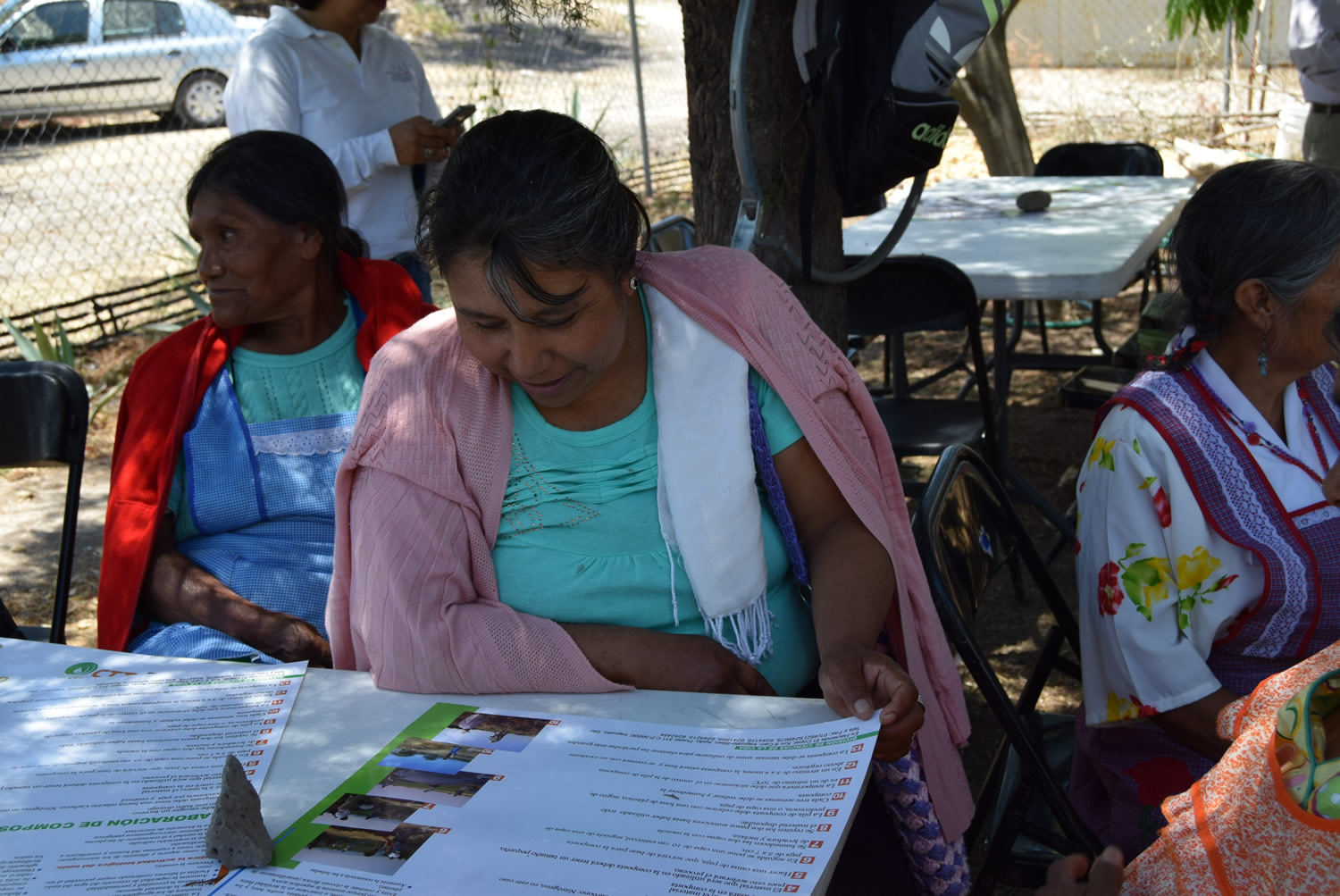
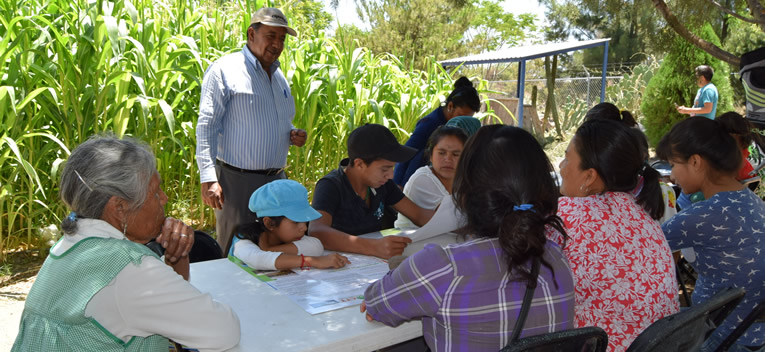
 Irapuato, Gto., June 6, 2018.- A group of enterprising women from the Chichimecas Mission Congregation of San Luis de la Paz attended the life sciences Division of the University of Guanajuato (UG) to receive training on the sustainable production of nopal, considered one of the most important plant resources for arid or semi-arid areas of the country.
Dr. Eduardo Salazar Solís, professor of the Department of Agronomy, and technical manager of the training, received the group of entrepreneurs interested in learning the elaboration of organic fertilizer for the harvest of this food recognized for its nutritious, chemical, industrial, ecological, medicinal, among other properties.
Personnel of the National Institute of the Social Economy (INAES) for three years have accompanied the group of women lead by Dulce and Griselda Ramírez and Alejandra Hernández, who together with other inhabitants of the place, contributed 600 plants of nopal.
With the support of the INAES and through the Liaison Center with the Environment, the university professor was asked to provide the training to the entrepreneurs who come from a congregation of more than 6000 inhabitants.
In dialogue with the interested parties, Dr. Salazar commented that in Guanajuato about 500,000 tons of chemical fertilizer are consumed, but it is desirable to increase the use of organic fertilizer. At the same time, it recommended linking the production of nopal with the breeding of sheep or goats, since this type of cattle can be fed with cactus trimming and the manure would be used in the elaboration of compost.
At the experimental Center for Agriculture, women learned how to make compost with straw, manure, a solution of molasses, yeast of bread and water. They also knew that compost improves the physical properties and biological activity of the soil, has environmental benefits and helps plants to increase their resistance to pests or frosts.
Most of the women and men on the Chichimecas Mission are day laborers, they dedicate themselves to the sowing and harvesting of quelite, alfalfa, broccoli, nopal and maize. They work the lands of the local land holder and of contractors that arrive from other states of the country to take them to work in seasons, hence the relevance that the inhabitants have a productive project of their own.
Photo gallery