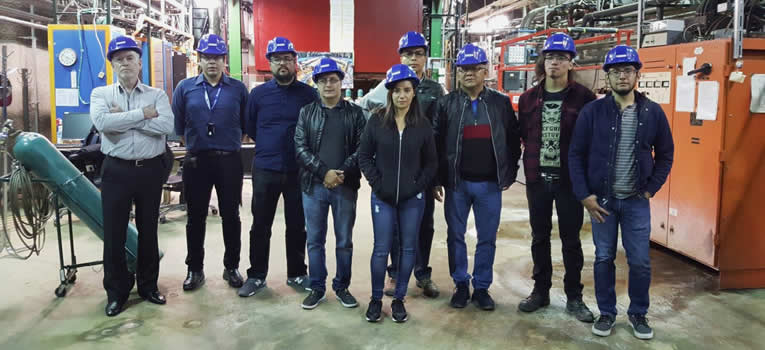
 León, Gto., June 7, 2018.- The Campus León of the University of Guanajuato (UG), through the Elementary Particle Laboratory of the Division of Sciences and Engineering (DCI), collaborates in research projects to create frontier technology and science, in addition to forming highly-trained human resources in the study of high energy physics.
Since the year 2008 UG students have participated in the Main Injector Experiment for V-A (MINERvA) project, in which 100 investigators collaborate for the study of elementary particles and was designed to measure the neutrino interactions with different nucleons and data analysis.
This experiment is developed at the Fermi National Accelerator Laboratory (Fermilab), located in Chicago, Illinois; it is the second most powerful particle accelerator in the world and is also an important training school for researchers in particle physics from all over the world and in which UG participates in technological development.
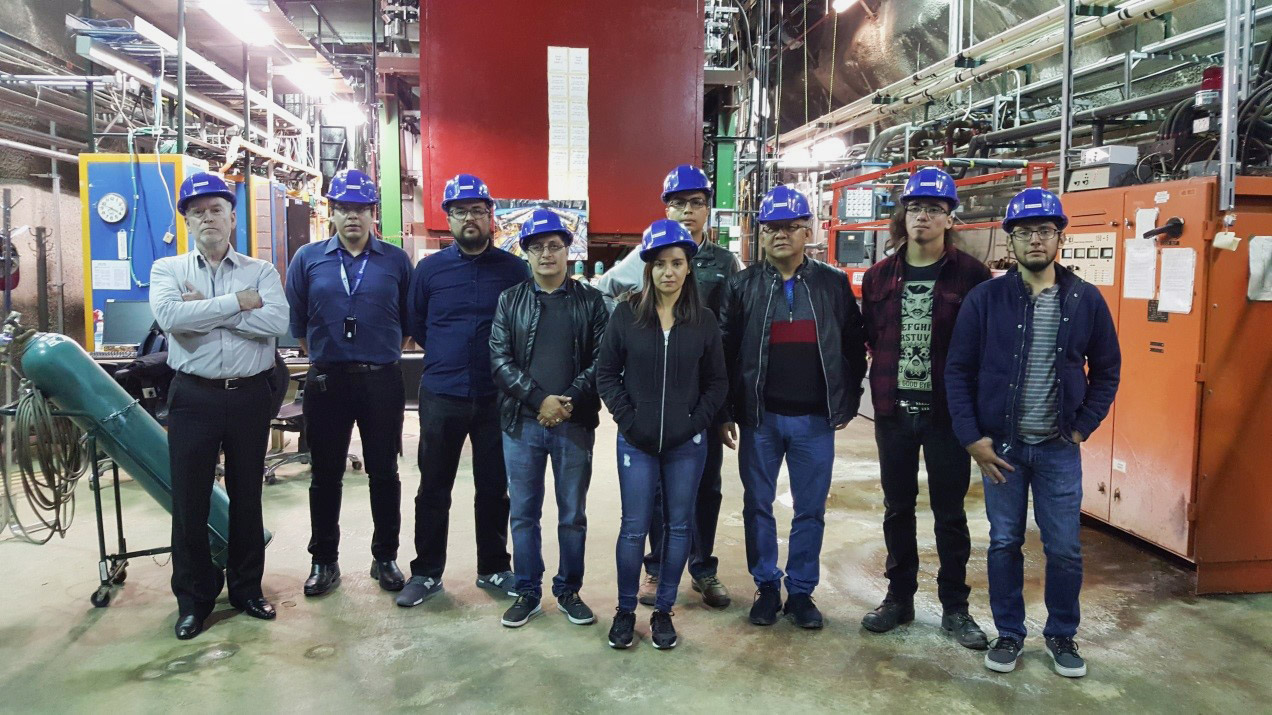
Thus, this center was the stage for four students of the DCI to make a stay, in which in addition to knowing the projects of the laboratory, attended lectures and interacted with graduate students of the UG who currently work in the Laboratory.
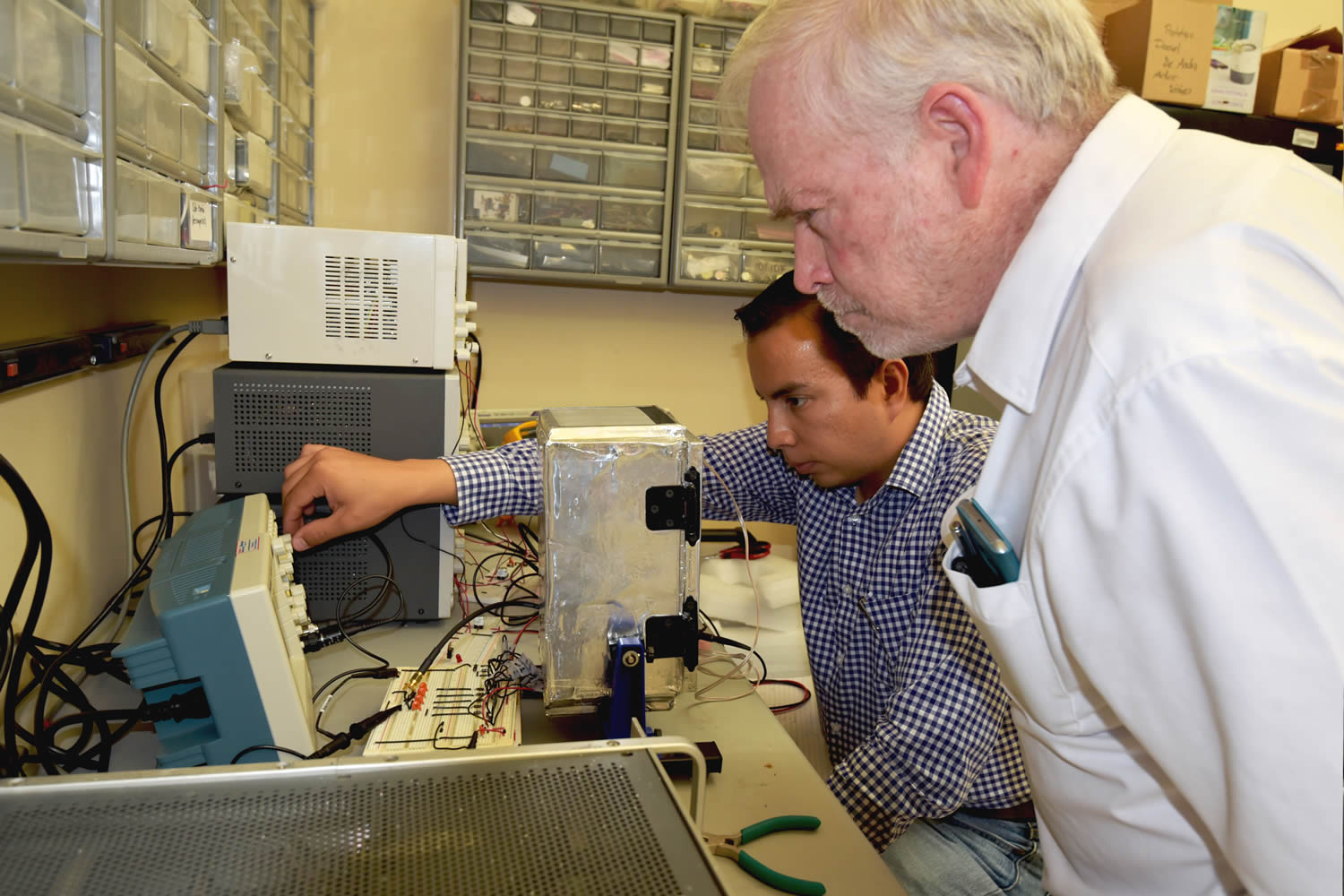
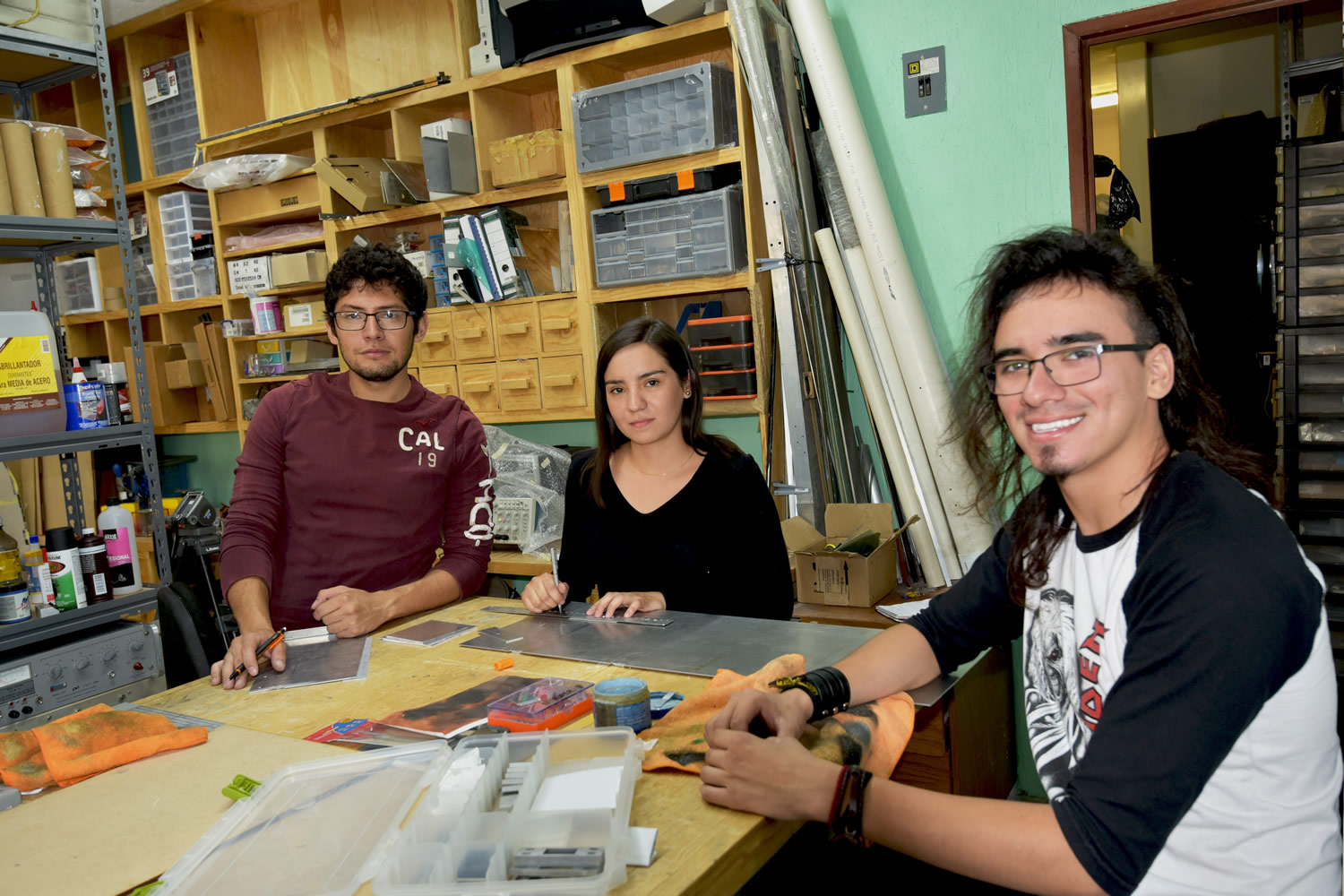
In an interview, Dr. Julián Félix Valdez, researcher at the Division of Science and Engineering and head of the elementary particle laboratory commented on the importance of collaborating with Fermilab because "participating in such projects has their educational impact and the formation of human resources." He noted that students design, plan and generate their own technology for the detection and study of cosmic rays, the basis for the elaboration of giant detectors.
He added that the three pillars of technological development in which we work in the experiment Deep Underground Neutrino Experiment (DUNE), are the detection of light, development of super computation, fast electronics and data acquisition system.
In this sense he indicated that the students have the opportunity to train and participate in the creation of the great detectors.
Carlos Andrés Cervantes Vera, a student of the physics degree, said that "Fermilab is a very stimulating place in the intellectual sense, which inspires new ideas, innovations that can encourage new projects in the future".
He said that currently works in his thesis project, which consists of a particle detector that aims to study cosmic rays and data analysis, "scientific level has a great involvement, because it helps us understand the universe , how it is done, what kind of particles come from space and develop applied technology in telecommunications, satellites and other satisfiers for society."
In the same way Andrea Paloma Cimental Chavez, student of the ninth semester of the degree in physics, made the stay in Fermilab, where he had the opportunity to attend meetings where she trains and trains students from Latin America. This project will have an investment of $1 billion from Britain and 800 million dollars from India.
Also Irvin Antonio González Ancira and Heriberto Miranda Nieto, of the educational program of physical engineering, were part of this group of young scientists.
The Fermilab laboratory has 51 years of scientific tradition and since the year 2015 works in the DUNE project, in which more than 1500 collaborators develop research on subatomic particles called neutrinos, to understand how the universe works and why matter exists.
In this great project, 175 institutions of research and higher education of 35 nations participate, with an investment of 3 billion dollars.
Photo gallery