 Celaya, Gto. September 3, 2018.- Professors of the University of Guanajuato, through the Laboratory of Bioinspired systems, make frontier research on neuroscience computing, aiming to contribute to the development of prototypes and software for the design and fabrication of instruments and robots, that ease the mobility of people with a disability or to improve the quality of life of people with autism or eyesight problems.
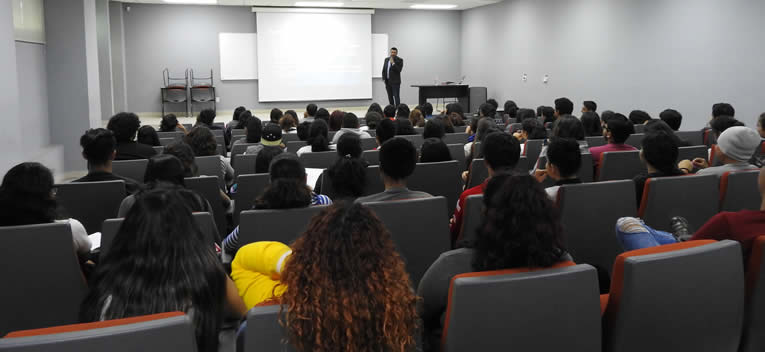
During the Neuroscience Computing workshop given by Dr. Horacio Rostro González at Campus Celaya-Salvatierra, he spoke about this branch of interdisciplinary science that links biophysics, cognitive science, electrical engineering, computing and mathematics, to study the brain dynamics.
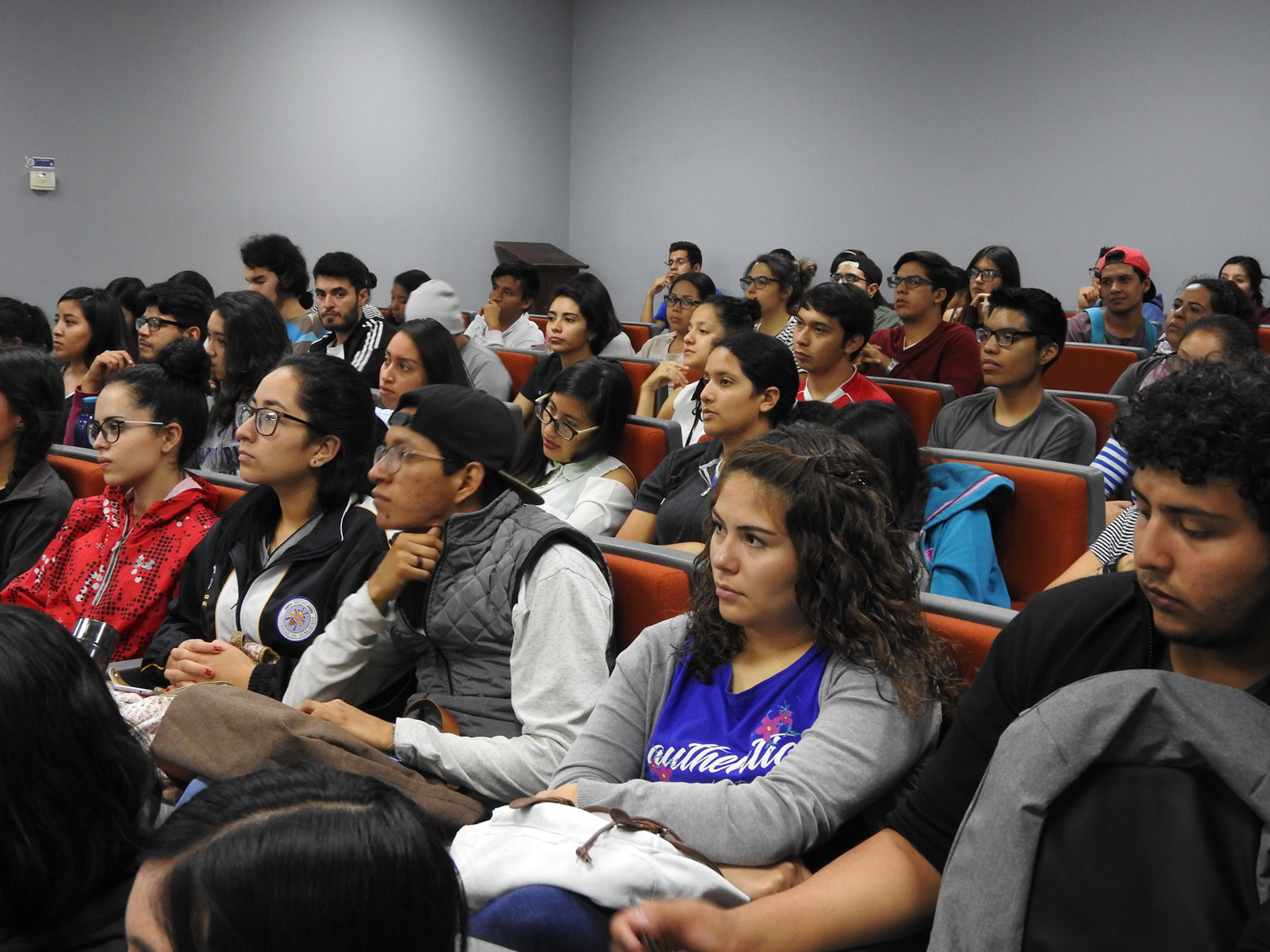
In front of student and professors of Clinical Psychology, he showed the progress the research project registers and explains how, from the study of interactions between neurons, they seek to move to a computer the behavior, storage, processing and transmission of information of certain functional neuron groups, with a high grade of realism.
The scientist explained to the students that even when neuroscience computing is a consolidated discipline, in applied research is difficult to study because it doesn't try to do biological experiments, but design bio-inspired robotic systems in the activity of millions of human neurons, capable of reproducing the dynamics that occur in our brain for the different activities.
"We want the computers to have chips so efficient and powerful as the human brain", comments Horacio Rostro, who actually participate in the SBIT (Biological Systems and Technological Innovation) research group and performs as professor of the Department of Engineering in Electronics, in UG's Campus Irapuato-Salamanca.
After clearing some doubts from the students, Horacio Rostro gathered with professors of the campus who are interested in joining the research projects linked to neuroscience computing.
It is about giving the students and professors all the possibilities for them to lean into this field of study and allow them to make new contributions in cognitive behavior", he says. "It is urgent to speed up the pace in this science which still is in diapers, because the contributions that can do to improve the quality of life are impressive", emphasized Horacio Rostro, who currently works on a research oriented to the use of visual rehabilitation in problems of poor vision, from neuroscience computing.
Photo gallery