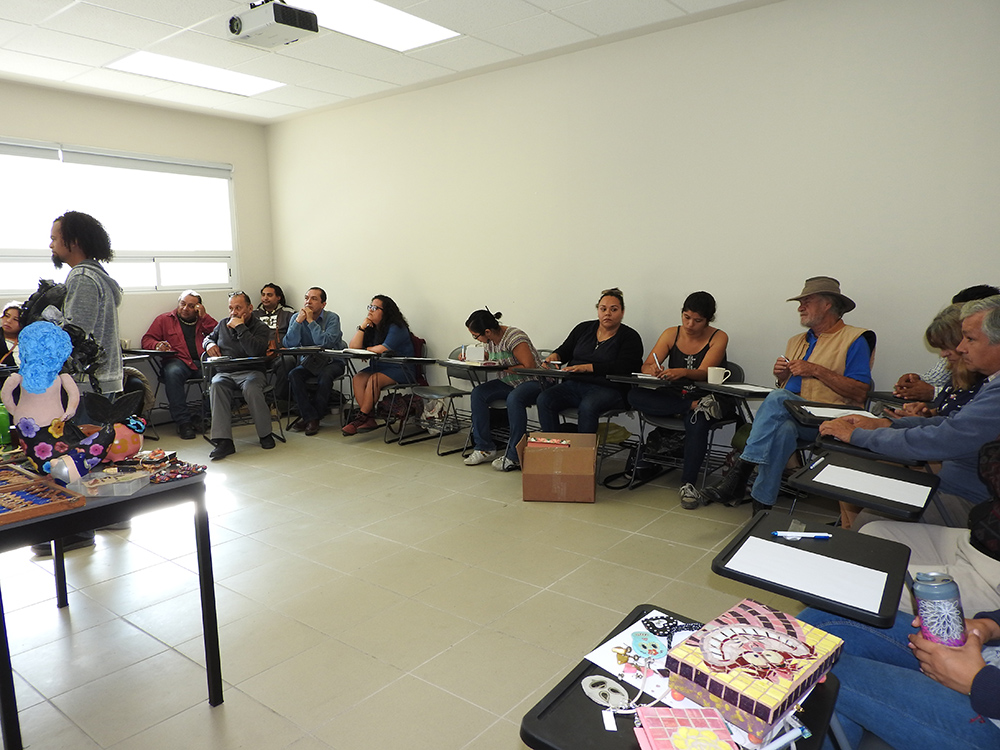
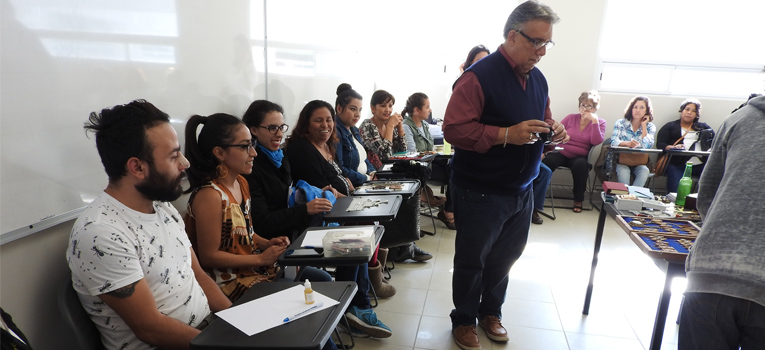
Celaya, Gto., October 17, 2018.- The University of Guanajuato brought together Cuban artists Santiago Hermés Martínez, founder of the Social Intervention Project "Trazos Libres" and María Cid Borrel with urban artists from Celaya and surrounding areas.
At the meeting they shared products, techniques, successful experiences, but also concerns and frustrations. They presented to the local artisans the sociocultural project "Trazos Libres", with which they have managed to bring the art and its creators to the popular neighborhoods, so that it melts with the community and this one takes it.
For their part, the urban artists attending showed their products, born of their dreams and their creativity: jewelry, fabrics, embroideries, painting, sculpture; plastic parts, stones, metals, glass, beads and other materials.
They shared the difficulties they have while commercializing their products in the tourist areas of the state like San Miguel de Allende, Guanajuato, Queretaro where the taxes to commercialize the art are very high for their income or they reject them for not having the "quality" required. "Art galleries House the work of specialists or friends, in which urban artists do not have room," they agreed.
The creators of "Trazos libres" invited them not to lose the spirit that gives them life, artistic creation, invited them to join without fear of sharing, to create collateral work to the market and strengthen the individual technical knowledge and the group to begin working on the added values, which are those elements of identity that are farmed in the culture, "look for the cultural characteristics of the region and work to give them their own value", they said convinced.
Santiago Hermés, a plastic artist, invited them not to lose sight of indigenous cultural roots in each of their creations, as this will allow them to give the products additional value and make them more competitive; "Maintain cultural value in a firm way," he said.
Cuban artists showed them new ways to socialize art and some techniques to move the market according to local products, as they did in 2009, when they created their intervention project, with the illusion of having a plural interactive artistic production space, which is now located in a neighborhood of Afro-descendant in the Bay of Cienfuegos, on the southern coast of Cuba.
By choosing this site and joining around a common purpose, artists generated an opportunity for art and for social groups that benefit from each of the creations, through the generation of employment opportunities for those who most demand it: Older adults, people with disabilities, women alone, and so on.
They recognized that artists have a hard time managing social dynamics, so it is necessary to unite efforts and create alliances "to build and compete, to be stronger and attract customers, because finally, must be a way to live and serve to live".
The meeting was organized by Dr. José Enrique Luna Correa, Director of the Department of Finance and Administration, of the Division of Social and Administrative Sciences, at the Celaya-Salvatierra Campus.
Photo gallery