Celaya, Gto., November 26, 2018.- With the aim of proposing an alternative economy that bets on the collective well-being with the solidarity component, students of the inter-institutional doctorate in Social Solidarity Economy (ESS), propose to generate knowledge in this recently created new area of study.
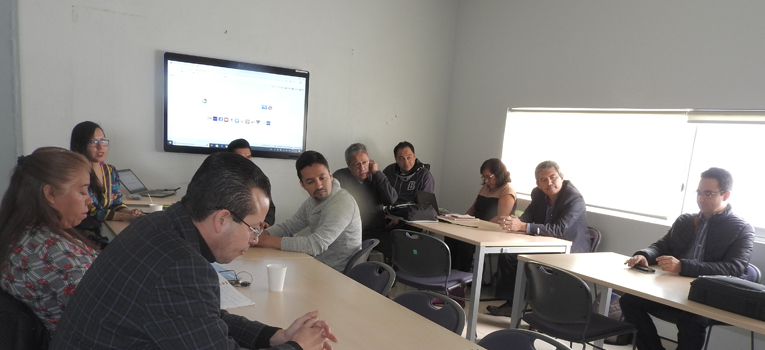
This was stated by Dr. Nicasio García Melchor, in welcoming the doctoral students from Guadalajara, Aguascalientes, Queretaro, Michoacán and Guanajuato, who on this occasion meet at Campus Celaya-Salvatierra, to carry out the Research Seminar I, which will address the basis of research design.
Professor Nicasio García is part of the Basic Academic Core of the Department of Social Studies, who will teach the interinstitutional doctorate seminar that is held in partnership with the Michoacán University of San Nicolás de Hidalgo and The University of Aguascalientes.
The solidarity economy is a discipline where there is little knowledge developed, the field of research and theorizing is being built from reflections rooted in the experience. According to the designers of this doctoral program, it was necessary to offer an alternative of higher education in economy with a plural and transformative vision, before the current context of crisis that is in the country now, obliges to revise the fundamentals of the social relations and the means of production and to look for the balance between the factors of production.
In the research seminar I, which is taught in person from 23 to 30 November, will be the basis of what will be the research projects of each of the doctoral students, from which develop a model proposal Economic alternative that allows to overcome the social, economic, political, cultural and environmental problems produced by a capitalist market economy.
Recently, the Rector general of the University of Guanajuato, Dr. Luis Felipe Guerrero Agripino, led a work meeting in which was carried out the updating of the General Agreement for Inter-institutional postgraduate studies of the higher education institutions of the Central West Region (RCO) of the National Association of higher education universities and institutions (ANUIES). This doctorate in social solidarity economy is one of the first seeds that is sown in this discipline within the framework of the convention and the result of interinstitutional work.
The modification of the agreement that was signed on that occasion seeks to meet the new needs that derive from the operation of the programs and is congruent with the doctorate because it is designed and structured in a context that has undergone profound social transformations, said Dr. Benito Rodríguez Haros, Director of the Division of Social and Administrative sciences.
Social solidarity economy is not economy for the less favored, the concept is much broader, said Dr. Benito Rodríguez, considers people, the environment and sustainable development beyond other interests. However, as we move forward in the generation of knowledge, we will know for certain how we can contribute from the Academy in the consolidation of the social economy of solidarity, he said.
Photo gallery