
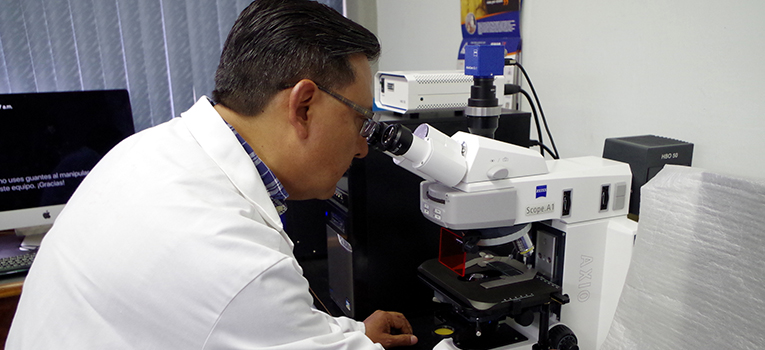
Guanajuato, Gto. December 27, 2018.- One of the main functions of the laboratory of Mutagenesis and DNA repair of the Department of Biology of the University of Guanajuato in charge of Dr. Mario Pedraza Reyes is to use molecular strategies to design recombinant bacteria with capacity improved to remediate industrial effluents contaminated with carcinogenic elements such as chromium and some synthetic dyes.
In an interview, the researcher at the University of Guanajuato mentioned "in my laboratory we are interested in solving environmental problems using modified bacteria through genetic and molecular biology approaches".
Dr. Mario Pedraza Reyes explained that, globally, along with his team are interested in showing how different environmental factors such as ultraviolet light, chemical pollutants and some intracellular factors products of aerobic metabolism damage the structure of nucleic acids in bacteria and hence understand the responses deployed by these microorganisms to counteract or tolerate this damage.
The experimental approaches implemented in the laboratory of DNA mutagenesis and repair have been directed to the design of recombinant bacteria that can be used specifically in the reduction of chromium VI, a carcinogen, as well as to reduce the environmental pollution produced by the textile industry by dumping large volumes of water with high levels of synthetic dyes.
One of the fundamental purposes for this research is that the leather and textile industries pollute the aquifers with chromium VI and synthetic dyes which represents a serious environmental problem. In addition, it is estimated that many people face serious health risks by ingesting or using contaminated water with such potentially inductive neoplasms.
Reason why in the laboratory they work with the bacteria "Bacillus subtilis" and "Escherichia coli" genetically modified to increase the production of oxidoreductases-a group of enzymes that catalyze the transfer of electrons from a molecule donor to another acceptor-and that resist a high concentration of chromium VI and are also able to reduce it.
Finally, Dr. Mario Pedraza Reyes mentioned that science is an indispensable tool to provide welfare to society "we use science, in this case molecular biology and genetics to modify microorganisms that contribute to reduce the environmental risks generated by industrial wastes potentially harmful to the health, as is the case of the contamination by chromium ". In this way we know that the new knowledge generated by our laboratory contributes very punctual benefits to the society."
Photo gallery