Guanajuato, Gto. December 19, 2018.- In order to generate devices that measure ionizing radiation to avoid excessive exposure, to prevent risks and affections to health professionals; Researchers and students from the León Campus of the University of Guanajuato (UG) work in the study of thermoluminescent materials.
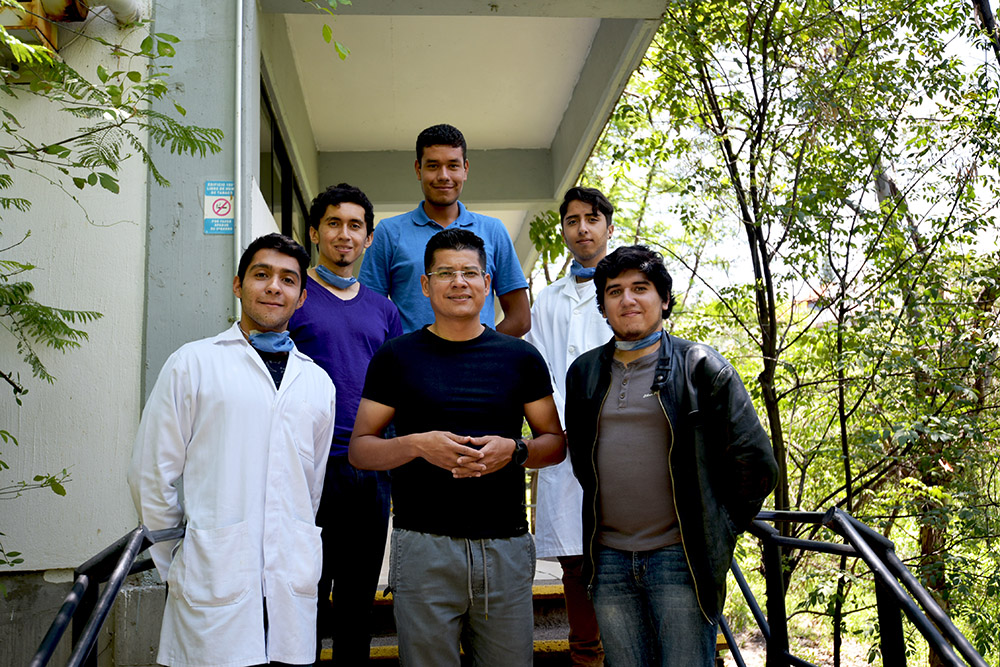
The research team is formed by Dr. Miguel Vallejo Hernández, Dr. Modesto Sosa, Dr. Christian Gómez Solís, Dr. Víctor Pablo Cerón and a total of thirty undergraduate and graduate students from the Science and Engineering Division (DCI).
Nurses, doctors, radio technicians, are exposed to this type of radiation that can cause effects because "in a high dose can be counterproductive to human health causing involvement in the thyroid or in the eyes It can specifically cause cataracts affecting the crystalline part," said Dr. Miguel Vallejo.
He explained that the work they have done during the last three years has allowed to generate a mobile device created with intelligent material capable of detecting and measuring the amount of radiation to which the patient should be subjected so as not to pass the parameters Established and in the same way avoid excessive exposure of the health professional.
"This device gives us the information of the radiation to which it was subjected, it also gives us information in real time. It is a mobile device that can be put in a ring, as in a pen on the flap and can be put on the lenses to be monitoring the lens," he settled.
He also commented that they work on other projects in which they collaborate with scientists from Argentina, the United States and Spain with the objective of creating a network dedicated to the study of the use of thermoluminescence and dosimetric materials.
He emphasized that a project with the scientific community of Argentina is in the process of approval, with which it is intended to know the environmental impact caused by the disposal of materials that are used in the mining industry.
"The objective of this project is to see how this type of affections can be avoided and to reverse that situation in the spaces where there is already a degradation so that the area is cleaned and populated with vegetation."
Finally, he said that he continues to experiment with other materials that can compete with existing ones so we work with quantum dots that are semiconducting nanoparticles that when exposed to light, emit different colors depending on their size and they have applications in biomedical, optical devices, solar panels, bioimaging, screens, among others.
Photo gallery