
León, Guanajuato November 21, 2015.- The University of Guanajuato through the Division of Social Sciences and Human Studies from Campus Leon, offers the Bachelor degree in Culture and Art that seeks the academic formation to integrate and democratize art and culture as a social good.
The coordinator from the bachelor degree in Culture and Art, M. Guadalupe Aguilar Salmeron, commented that "this degree forms in the young a professional area in which they are capable of negotiating or intervening in society with cultural and artistic projects".
She added that with particular initiatives or inside of any cultural institution, museum, library, theater, culture houses, diverse festivals, state culture institutions, city culture institutions, among others, projects for the cultural and music industries develops and this allows creating cultural strategies for the development in the area of the three government levels.
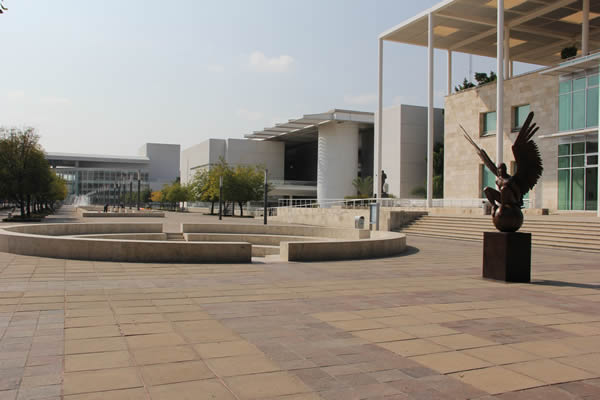
The academic program emerges in the context of the creation of the Cultural Forum Guanajuato where the Museum of Art and History of Guanajuato is, also the State Central Library and the Bicentennial Theater. The program was part of an academic effort among federal, state and city authorities who created a school where these elements join to promote culture.
Through annual summons, they accept around fifty students; likewise, the eleven full time professors ascribed to the program have a Ph.D. degree and half are part of the National Researchers Systems (SNI for its acronym in Spanish). Historians of art, historians, architects, musicians, anthropologists and artists compose the faculty staff.
The program has three axis; the first is the humanistic where they seek to generate a close thought to the philosophical being and human expertise. The second is the professionalizing where they develop their own capacities for administration and cultural management. The third settles down in the area of art workshops and jobs where the students acquire sensibility from the practices in these guilds that will promote.
The facilities have classrooms and amphitheaters, rest areas, exhibit areas, museographic, an auditorium equipped with standardized measures stage, dance room, workshop with a kiln, textile workshops with old looms, drawing workshop, laboratory for printing and music study.