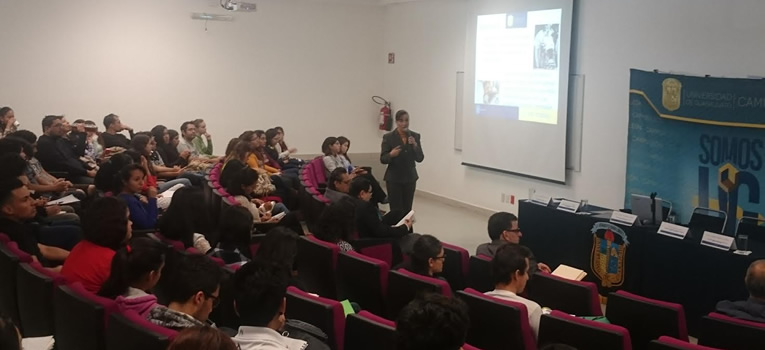
León, Gto., March 3, 2016.- Through a series of talks and conferences based in studies with elder people, the University of Guanajuato Campus León made the Interdisciplinary Seminar of Ageing, coordinated by Dr. Alejandro Klein, Director of the Department of Public Management and Development of the Division of Social Sciences and Human Studies of campus.
The event had the presence of several researchers from the area of health sciences and social sciences, among them, the presence of Dr. Luxana Reynaga Ornelas, Dr. Luis Fernando Macías García, Dr. Alejandro Klein and Dr. Carlos Kornhauser stand out.
Firstly, Dr. Luxana Reyanaga addressed the topic of "Calidad de vida en personas con enfermedades crónico-degenerativas" (Quality of life of people with chronic-degenerative diseases), in which she highlighted the results obtained from patients with diabetes and chronic renal failure, and presented two instruments used to measure the quality of life.
The scholar concluded that "the quality of life is an optimal way to evaluate the result of our work from the point of view of the person who lives the health-sickness-rehabilitation-death process."
On his behalf, Dr. Luis Fernando Macías García presented the topic "Horizontes de envejecimiento y antropologías de la edad" (Horizons of ageing and anthropologies of age" where he shared studies and analysis about the health conditions in the current world and contemporary ageing and informed that in the year 2050, 60% of the population will be an elder. In addition, he exposed that in European countries, it is mandatory to care for the elder, different to Mexico, where most elders are not even affiliated to a popular health care.
In Dr. Alejandro Klein's intervention, under the title "Tratando de comprender los vínculos intergeneracionales y los roles de los abuelos contemporaneous" (Trying to understand the inter-generational links and the roles of the contemporary grandparents), they analyzed diverse points, such as the actual role of grandparents, compared five decades ago, and the need these have to coexist and share time with their grandchildren. He remarked that generally, today's grandparents lived alone because they are independent and owners of their space.
About the frequency of hidden renal illness, Dr. Carlos Kornhauser Araujo, presented results from studies made with elders that concluded that this type of illness is minor in women than in men.
During the session, students and professors of Campus León interacted through questions for each of the speakers. In the mid-term, they will continue with this type of research in liaison with health sector, Social and Human development and non-governmental institutions, as well as to continue the collaboration with The Oxford Institute of Population Ageing.