Celaya, Gto., March 18, 2015.- Parting from the third level of the Nursing and Midwifery degree from University of Guanajuato's (UG) Campus Celaya-Salvatierra, they teach the subject of Community nurse, where they receive orientation in didactic, pedagogic and human formation areas.
The students found themselves ready to teach and divulge knowledge --with these actions— to families that are part of the communities, with the purpose to make them aware of the importance of environmental care, family health, reproductive health and health habits, always seeking to improve the quality of life in the community where they work.
Prevention is a priority strategy within the health policies, and their purpose is to communicate messages and develop actions that not only provide objective and adequate knowledge about the social-economic-sanitary-epidemiologic problems within the community: referring to housing, nourishment, labor and ecological conditions.
Such strategy allows to intervene in the community nurse with information and action. This is an activity that is socially recognized and funded in the public needs with a greater benefit.
M. Maria de Jesús Ramírez, professor of Campus Celaya-Salvatierra and coordinator of the area in the first level of attention for the Division of Health Sciences and Engineering, explained that "as an academic objective we seek that the future professionals have the skills and competences in the first level of attention and they will only achieve that with field practice; in this activity they can develop teaching competences, assisting support, research and understand and tend the health patient".
She added that they had a model for teaching the primary attention of health, community nurse, supported by the liaison with the state's Department of Health, and the work activities made in collaboration with society.
M. Ramírez abounded that the first stage of the project is to identify the community, where they will raise a family card, make reunions with the corresponding sectors to inform about the diagnosis and with an action plan for approach and detection of risks.
At the end, they offer health fairs where the habitants from the communities receive workshops, talks and dynamics such as taking care of water, earth, how to face the problems within the community and obviously how to prevent and solve problems related to diseases such as diarrhea, infections in the respiratory ways.
Derived from these actions, the population comprehends the importance of self-care of health, and once the action plan concludes. They make a sanitary tour with involved authorities to certify the community as healthy.
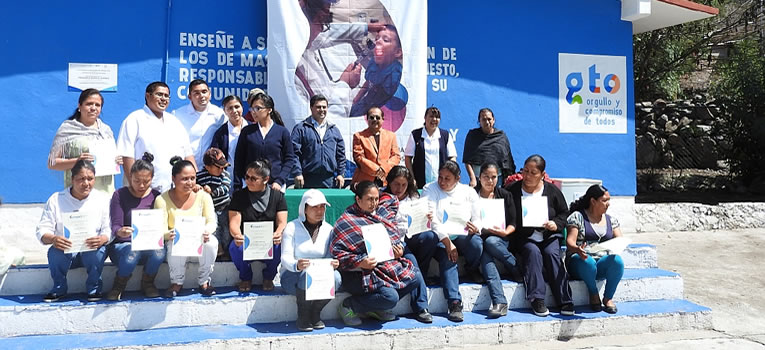
M. María de Jesús, concluded that during the semesters they work with different communities and according the work, some manage to certify before others and mentioned that currently they make actions in the community of La Mocha and La Parra, both belong to the city of Cortazar and who expect for the works to conclude and certify them during the year.
Equally she highlighted the work done in the community of Capulines, where recently they managed to conclude with the certification work.
In the students' opinion, it is a great satisfaction that through their actions the community improves its quality of life and express that it is a life experience, since they are in touch with people and can explain them as many times as necessary without hurry.